
A panel of retired Supreme Court and High Court judges, part of an Independent Commission on Special Intensive Revision (SIR), held a public hearing on Thursday to address widespread deletions from India's electoral rolls. Testimonies from affected citizens, including a former MP and a Delhi resident declared deceased by the Election Commission, highlighted significant issues. The SIR process, initiated in 2025, has led to the removal of approximately 13 crore voters nationwide, with substantial deletions reported in Delhi and Uttar Pradesh.

The Election Commission is set to publish the draft electoral rolls for West Bengal on Tuesday following the completion of the statewide Special Intensive Revision (SIR) ahead of the 2026 assembly polls. The publication of the draft rolls will mark the end of the enumeration phase and the beginning of a far more contentious stage - claims, objections and hearings that will stretch into February 2026.
The Election Commission has announced a Special Summary Revision of electoral rolls in 17 states and Union territories, including those facing assembly polls next year. This initiative aims to enrol new voters, correct existing entries, and enhance the accuracy of voter lists, with January 1, 2027, set as the qualifying date.

The Supreme Court has directed the Election Commission to devise a mechanism to reach out to approximately 47 lakh Delhi voters whose names were struck out from the draft electoral rolls during the ongoing Special Summary Revision (SIR). The court emphasised that the right to vote is vital and cannot be forfeited due to absence, questioning the EC's requirement for previously enrolled voters to file Form 6 for re-inclusion and suggesting alternative methods like publishing lists and accepting late enumeration forms.
A Delhi court has sought responses from Sonia Gandhi and the police on a plea challenging a magistrate's order refusing a probe into allegations that she was included in electoral rolls before acquiring Indian citizenship.

The Supreme Court has sought a response from the Election Commission on a plea by Trinamool Congress MPs alleging irregularities in the revision of electoral rolls in West Bengal.

Rahul Gandhi made a cryptic social media post about swimming in rough seas, which coincided with a political controversy surrounding alleged irregularities within the Election Commission. A report by The Indian Express highlighted that two Election Commissioners had repeatedly questioned decisions regarding electoral roll revisions, a matter Gandhi had previously raised as "vote chori."

Former Tamil Nadu BJP president K Annamalai has strongly criticised the Delhi Police for its recent actions against members of the Cockroach Janta Party (CJP), calling it a "real disservice." Annamalai defended CJP's democratic right to raise critical questions, particularly regarding electoral roll revisions, and warned that heavy-handed police measures would only strengthen the critics. He emphasised that the government should address the substantive public queries instead of resorting to arrests.

The DMK has launched a strong attack on Congress leader Rahul Gandhi, questioning his silence on alleged voter deletions in Tamil Nadu and accusing him of inconsistency regarding electoral roll revisions. This comes amidst a broader campaign by the INDIA bloc against the Election Commission over the Special Intensive Revision (SIR) process.

CJP founder Abhijeet Dipke, YouTuber Dhruv Rathee, and actor-activist Prakash Raj joined a protest in Bengaluru, demanding the scrapping of the electoral roll revision exercise and the resignation of Chief Election Commissioner Gyanesh Kumar, alleging widespread voter deletion aimed at disenfranchising specific groups.

The Election Commission has informed the Supreme Court that voters previously enrolled but missing from draft electoral rolls can re-apply via Form 6 without facing prosecution. This clarification aims to allay fears and ensure eligible citizens are not deprived of their right to vote, while also addressing concerns about Absent, Shifted, Dead, or Duplicate (ASDD) voters.
The Election Commission of India is conducting a special intensive revision of the electoral roll in Bihar, with over 6.60 crore electors expected to be included in the draft roll.
The Supreme Court will hear a plea on October 28 regarding the Special Intensive Revision (SIR) of Delhi's electoral roll. Petitioners seek transparency from the Election Commission on voter deletion reasons and a simplified re-inclusion process for those omitted, especially concerning Form 6. The court had previously raised concerns about "mechanical" notice issuance during the SIR, which led to 47 lakh voter deletions in Delhi.

FIRs have been registered against BJP leader Ravi Patil and others in Karnataka for allegedly attempting to delete the names of minority community voters from electoral rolls using fraudulent Form-7 applications. Similar cases of alleged voter deletion have also emerged in Bidar and Mysuru, leading to political protests by the Chief Minister.

More than 2.06 crore electors, representing 21.14 per cent of Maharashtra's previous voter base, have been excluded from the draft electoral roll following a Special Intensive Revision (SIR) due to reasons like being untraceable, deceased, or having shifted residences.
Bengaluru's electorate has significantly decreased by 43.13% to 59.08 lakh after the Special Intensive Revision (SIR) process and the publication of the final electoral roll on October 27. This reduction is largely due to deletions under the ASDDO category (Absent, Shifted, Dead, Duplicate, Others), with Bengaluru South and Mahadevapura seeing the highest number of removals. Despite the deletions, the Chief Electoral Officer assured that no eligible voter was removed and the process was transparent.

The Supreme Court is set to hear pleas challenging Chief Election Commissioner Gyanesh Kumar's alleged unilateral decisions without the concurrence of other election commissioners. The petitions seek his suspension and question actions like altering voter registration forms and handling electoral roll revisions in Goa and West Bengal, highlighting concerns over the multi-member character of the Election Commission.
Delhi's draft electoral rolls show a significant reduction in voters, with affluent constituencies experiencing a higher percentage drop (37.4%) compared to areas with unauthorised colonies and Jhuggi-Jhopdi clusters (35.7%). Overall, 47.5 lakh voters have been excluded, with officials noting Delhi's exclusion rate is the highest among states undertaking Special Intensive Revision. Citizens have until September 30 to file claims and objections before the final roll is published on November 4.
A petition has been filed in the Supreme Court challenging Chief Election Commissioner Gyanesh Kumar over alleged statutory duty violations and the controversial deletion of 13 crore voters during the Special Intensive Revision of electoral rolls, claiming decisions were made without the concurrence of other election commissioners.

The Election Commission of India has introduced a mandatory declaration for new voters, requiring them to provide parental details from the Special Intensive Revision (SIR) exercise. This move, aimed at streamlining voter mapping, has sparked controversy, with some Election Commissioners deeming it "illegal" and "unauthorised" due to potential negative impacts on young voters.

Uttar Pradesh Chief Electoral Officer Navdeep Rinwa clarified that the Election Commission's database does not store voter religion information, refuting claims of a conspiracy to target specific communities. This statement comes after Chief Minister Yogi Adityanath's remarks about "missing" Hindu voters and subsequent allegations from the Samajwadi Party. Rinwa explained that any analysis of voter religion by external parties is based on publicly available voter lists and software tools, not EC data.

Thousands of protesters, including farmers, trade unionists, students, and Left party members, marched towards the Election Commission of India headquarters in Delhi, demanding the resignation of Chief Election Commissioner Gyanesh Kumar and the withdrawal of the ongoing Special Intensive Revision (SIR) of electoral rolls, alleging 'vote chori' and exclusion of eligible citizens.

The Election Commission has extended the Special Intensive Revision of electoral rolls in Maharashtra by 10 days, moving the deadline to August 8. This extension also shifts the draft electoral roll publication to August 18, as part of ongoing efforts to update and verify voter information through house-to-house checks and document submissions.

The Election Commission of India clarified to the Bombay High Court that the absence of a voter's name from a draft Special Intensive Revision (SIR) roll does not equate to deletion, as SIR is a fresh preparation of the electoral roll. This clarification came during a hearing on a writ petition filed by a Goa resident whose family's names were missing from the SIR roll. The court has reserved its verdict.
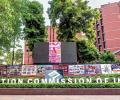
The Election Commission has clarified that its ECINet platform is decentralised, with statutory functions performed only by designated officials, not headquarters staff. This comes after concerns were raised about the centralisation of electoral roll databases. The EC also defended the legality of an additional declaration sought from new voters during the Special Intensive Revision, citing unanimous commission approval and a Supreme Court judgment.

BJP leader Kirit Somaiya has claimed actor Imran Khan, who participated in a protest, holds US citizenship and questioned his motive. Somaiya lodged a complaint, alleging a conspiracy to create anarchy through protests against electoral roll revisions and stating police assured him of summoning Khan for citizenship documents.

Uttarakhand's final electoral roll, released after the Special Intensive Revision, shows a significant reduction of approximately 8 lakh voters compared to the start of the process, with the total now standing at 71.58 lakh. The opposition Congress, however, claims the decline is much steeper, citing a 14 lakh reduction from an earlier figure. The Chief Electoral Officer's office detailed the revision process, including additions and removals, and outlined ongoing efforts to ensure all eligible citizens are included.

The Supreme Court is set to hear a plea filed by Congress leader Rahul Gandhi and other opposition figures on Thursday regarding alleged large-scale voter deletions and irregularities in the Special Intensive Revision of electoral rolls. The petition seeks an independent audit of these deletions and modifications, and a direction to prevent further deletions without due process.

The Election Commission on Monday defended its decision to conduct the Special Intensive Revision (SIR) of electoral rolls in the Supreme Court, saying the exercise was undertaken in accordance with the law and the three orders on its roll-out were approved unanimously by the Commission's three members.

Goa Forward Party chief Vijai Sardesai has alleged that Nepalese nationals were added to the state's electoral rolls during the Special Intensive Revision (SIR) and that voters were illegally shifted between constituencies. He has demanded an impartial investigation into these alleged irregularities, calling for deletion of illegal entries and action against those responsible.

Several political parties in Tamil Nadu, including the ruling TVK and opposition DMK, walked out of an all-party meeting convened by the Election Commission. They demanded the resignation of Chief Election Commissioner Gyanesh Kumar, citing alleged irregularities and a lack of transparency in the previous Special Intensive Revision of electoral rolls, where millions of voters were reportedly removed or flagged. The AIADMK and BJP attended the meeting, with AIADMK also raising concerns about the large number of affected voters.
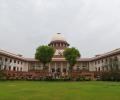
The Supreme Court clarified on Monday that it had not adjudicated on the new Form 6, used for inclusion in electoral rolls, during its hearing on the Special Intensive Revision (SIR) of electoral rolls in Bihar. This clarification comes after the Election Commission's press release suggested the apex court had upheld the Form 6 declaration.

Prominent individuals, including Infosys co-founder Nandan Nilekani and Zerodha founders Nithin and Nikhil Kamath, have appeared on a notice list during Karnataka's Special Intensive Revision (SIR) of electoral rolls due to various discrepancies. Authorities clarify that these notices are part of a verification process and officials will assist in resolving the issues without inconveniencing the individuals, also debunking reports about CM D K Shivakumar's mother receiving a notice.

The Election Commission of India has told the Delhi high court that two voters, whose names were deleted from the electoral rolls after they could not complete the enumeration process during the Special Intensive Revision in the national capital, can fill Form 6 for redressal of their grievance.

CJP spokesperson Ashutosh Ranka has reiterated the outfit's demand for CEC Gyanesh Kumar's resignation, alleging the exclusion of 13 crore names from electoral rolls and questioning the BJP's defence of Kumar. The CJP plans a nationwide protest starting October 2, vowing not to back down until Kumar resigns, and has launched the 'Election Commission Thik Karo' campaign. Ranka also accused the CEC of fraudulently redrawing constituencies in Assam to benefit the ruling party.

Karnataka's final electoral roll, published on Tuesday, shows a significant reduction of nearly one crore voters following the Special Intensive Revision (SIR) process, bringing the total count to 4.55 crore from 5.54 crore.
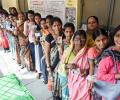
Data from the State Election Commission reveals that over 11 lakh voters in Mumbai have duplicate enrolments in the electoral roll. The SEC has extended the deadline for submitting objections, and opposition leaders have alleged irregularities in the voter list revision.

Former Chief Election Commissioners have voiced strong objections to reported 'illegal' changes in voter registration Form 6 and the centralisation of electoral roll control, raising serious concerns about the integrity of future elections.

The Supreme Court has sought a response from the Election Commission regarding a plea by TMC MP Dola Sen, who alleges unauthorised changes to Form 6 during the Special Intensive Revision of electoral rolls in Bihar. Sen claims the EC wrongly suggested the Supreme Court approved these changes. The EC, in its affidavit, defended the SIR process, stating no changes were made to the statutory Form 6 and that all decisions were unanimous. The court has given petitioners 10 days to respond to the EC's affidavit.

Data reveals that the number of voters in Uttar Pradesh, Uttarakhand, Goa, Punjab, and Manipur has decreased by up to 13.24 per cent following the Special Intensive Revision (SIR) of electoral rolls. Across these five states, the electorate shrank by approximately 2.29 crore, a 12.2 per cent reduction, with Uttar Pradesh accounting for nearly 90 per cent of this drop. These states are slated for assembly polls early next year, and the Election Commission is conducting further revisions to include eligible voters.
